Mongoose
Last edited by dave on 30/11/2025, 22:50:39 UTC
Contents
Did you mean Mongoose (MongoDB)?
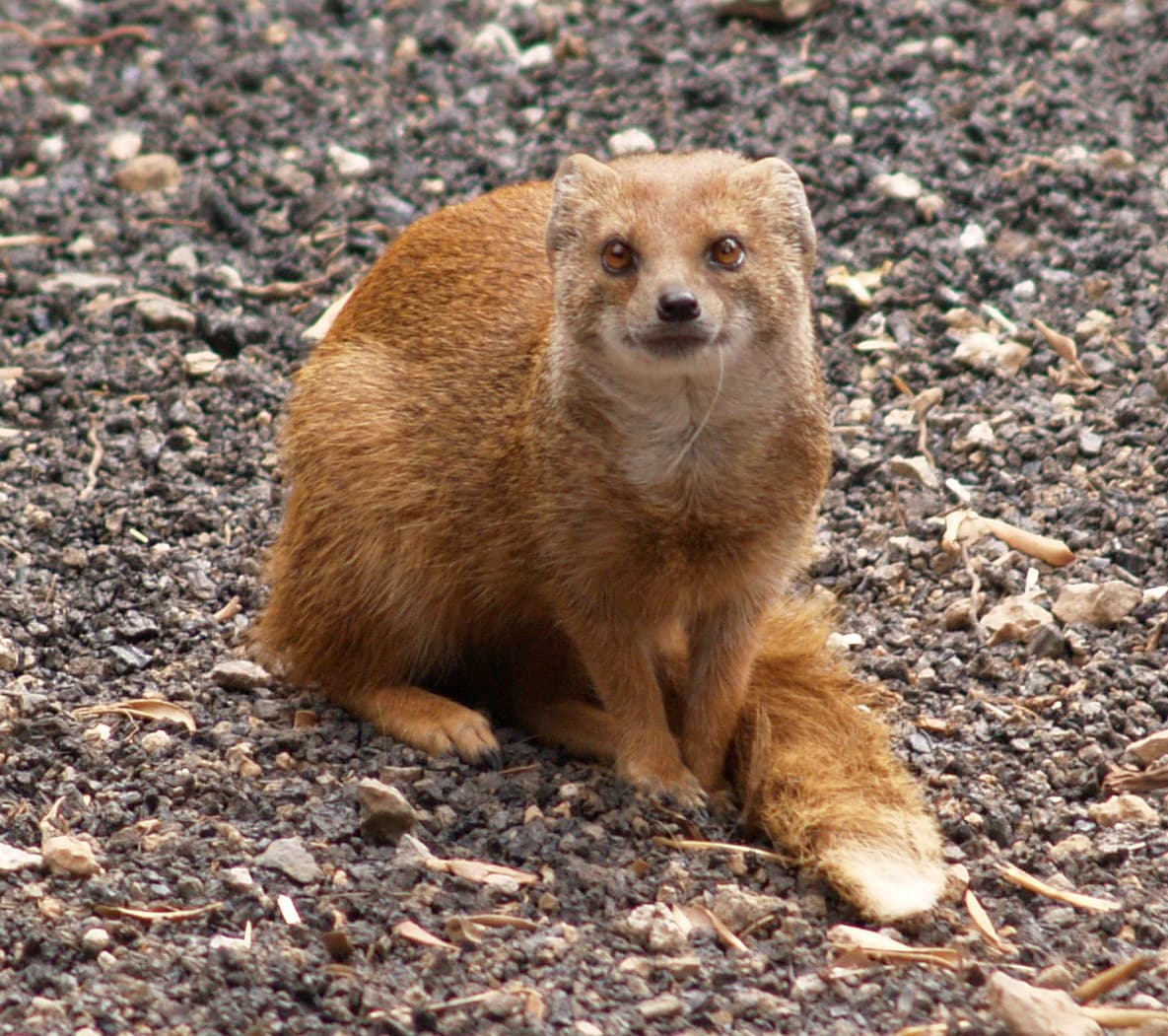
Yellow mongoose (C. penicillata)
Quick Snapshot
- Scientific Name: Herpestidae (family)
- Common Name: Mongoose
- Type: Mammal
- Class: Mammalia
- Order: Carnivora
- Average Lifespan: 6–10 years (wild)
- Diet: Carnivorous / Insectivorous
- Habitat: Grasslands, savannas, forests, deserts, and scrublands
- Native Range: Africa, southern Asia, and parts of southern Europe
- Notable For: Snake-fighting skills, high agility, and mischievous charisma
The mongoose is nature’s small, sleek daredevil — cute enough to pet, fast enough to vanish, and bold enough to stare down a cobra before lunch.
🧬 Classification & Species
The mongoose isn’t a single species but a family of about 30+ species in the family Herpestidae.
Famous members include:
| Common Name | Scientific Name | Notable Trait |
|---|---|---|
| Indian Grey Mongoose | Herpestes edwardsii | Snake-slayer extraordinaire |
| Banded Mongoose | Mungos mungo | Lives in cooperative groups |
| Dwarf Mongoose | Helogale parvula | Africa’s smallest carnivore |
| Egyptian Mongoose | Herpestes ichneumon | Ancient Egyptian pet and symbol |
| Crab-eating Mongoose | Herpestes urva | Loves seafood |
| Meerkat | Suricata suricatta | Technically a mongoose — yes, really |
So, yes — meerkats are mongooses, and Timon from The Lion King has a family tree full of snake-fighting cousins.
🌍 Distribution & Habitat
Mongooses thrive across:
- Africa: From savannas to deserts.
- Asia: Especially India and the Middle East.
- Europe: Found in Iberia (Spain, Portugal).
- Introduced Populations: Hawaii, the Caribbean, and Japan — where they’ve caused ecological chaos by eating native species.
They’re adaptable, thriving anywhere with food, cover, and the occasional snake to annoy.
🐾 Physical Characteristics
- Size: 18 cm (dwarf) to 60 cm (Egyptian).
- Weight: 300 g to 5 kg.
- Body: Slender, long-bodied, short-legged.
- Tail: Often as long as the body — used for balance.
- Fur: Brown, grey, or reddish, often banded or speckled.
- Face: Sharp, pointed muzzle and bright, inquisitive eyes.
They look like someone crossed a ferret, a cat, and a caffeine addiction.
🍗 Diet & Feeding
Mongooses are opportunistic carnivores — they’ll eat almost anything that moves (or doesn’t, if it smells interesting).
Diet includes:
- Insects and larvae
- Rodents and small birds
- Eggs (a mongoose can crack them by throwing them at rocks)
- Reptiles and amphibians
- Fruit and seeds (occasionally)
- Snakes 🐍 — because why not?
The Snake Thing
Mongooses aren’t immune to venom, but they have nicotinic acetylcholine receptor mutations that reduce venom sensitivity.
Combined with lightning reflexes and thick fur, they often defeat venomous snakes — especially cobras.
It’s not magic — it’s biochemistry and bravado.
🧠 Behavior & Intelligence
Mongooses are clever, curious, and highly social (in many species).
Social Structure
- Solitary species: Like the Indian grey mongoose.
- Social species: Like the banded or dwarf mongoose, which live in groups up to 40 strong.
- Cooperation: Group species share childcare, foraging, and defense.
Communication
They use chirps, growls, squeaks, and tail signals.
Some species even display proto-syntax — combining calls to form meaning, similar to early human language patterns.
That’s right: mongooses have grammar.
🏠 Reproduction
- Mating System: Varies — some monogamous, others communal breeders.
- Gestation: ~42–56 days.
- Litter Size: 2–5 pups.
- Parental Care: Strong — especially in social species, where all members help raise young.
Baby mongooses are born blind and helpless but grow up fast — and soon start wrestling scorpions for fun.
🦁 Predators & Threats
Predators include:
- Large birds of prey (eagles, hawks)
- Snakes (when tables turn)
- Jackals, foxes, and wild cats
Main human threats:
- Habitat loss
- Hunting for fur or pest control
- Invasive populations leading to control measures
Mongooses are tough survivors — fast, adaptable, and equipped with a serious attitude problem.
🏛️ In Culture & Mythology
- Ancient Egypt: The Egyptian mongoose (ichneumon) was revered and mummified — believed to protect against snakes and evil.
- India: Featured in Rudyard Kipling’s Rikki-Tikki-Tavi — the legendary cobra-slaying mongoose.
- Hawaii & Caribbean: Introduced for pest control (rats), but became an invasive nightmare.
Few animals have gone from sacred guardian to ecological villain quite like the mongoose.
🧠 Fun Facts
- The plural of mongoose is mongooses, not “mongeese.”
- They can jump backward to dodge snake strikes — think Kung Fu, but fluffier.
- Some species use tools, dropping eggs or nuts onto hard surfaces to crack them open.
- Dwarf mongooses sleep in termite mounds — cozy and bug-protected.
- They have pupil slits like cats, perfect for bright environments.
🧭 Conservation Status
Most species: Least Concern (IUCN)
Some island species: Threatened or Endangered due to habitat loss and invasive species.
Mongooses are survivors — but in ecosystems where they were introduced, others aren’t so lucky.
🧾 TL;DR Mind Map
| Category | Details |
|---|---|
| Family | Herpestidae |
| Diet | Carnivorous / opportunistic |
| Known For | Snake-fighting reflexes |
| Behavior | Social or solitary, intelligent |
| Distribution | Africa, Asia, parts of Europe |
| Symbolism | Bravery, protection, cunning |
| Plural | Mongooses (not mongeese!) |
🪄 Famous Mongoose Moments
- Rikki-Tikki-Tavi (1894): Hero of Kipling’s The Jungle Book.
- Hawaiian Invasion: Introduced in 1800s to control rats — backfired spectacularly.
- Scientific Fame: Studied for venom resistance and cooperative behavior.
Backlinks (1)
- General
- User
No backlinks yet.
- Redirects
No backlinks yet.
- Media
No backlinks yet.
- Categories
No backlinks yet.
Categories (0)
No categories assigned to this page.
Edit Level
> Signed In Users
Latest on Lounge
Join the conversation about the 'Mongoose' article →
No comments yet. Be the first to comment!